SACRAMENTO — The California Department of Fish and Wildlife is accepting applications for $2 million in grants to develop or enhance recovery of the Mojave Desert tortoise, the agency announced this month.
The funding, according to the department’s call for projects, is meant for work that produces measurable, near-term progress toward recovery in California, with priority for actions that have a strong evidence base and can report outcomes within the grant period.
Senate Bill 111 amended the Budget Act of 2026 to allocate the $2 million from the state General Fund to the department for tortoise recovery.
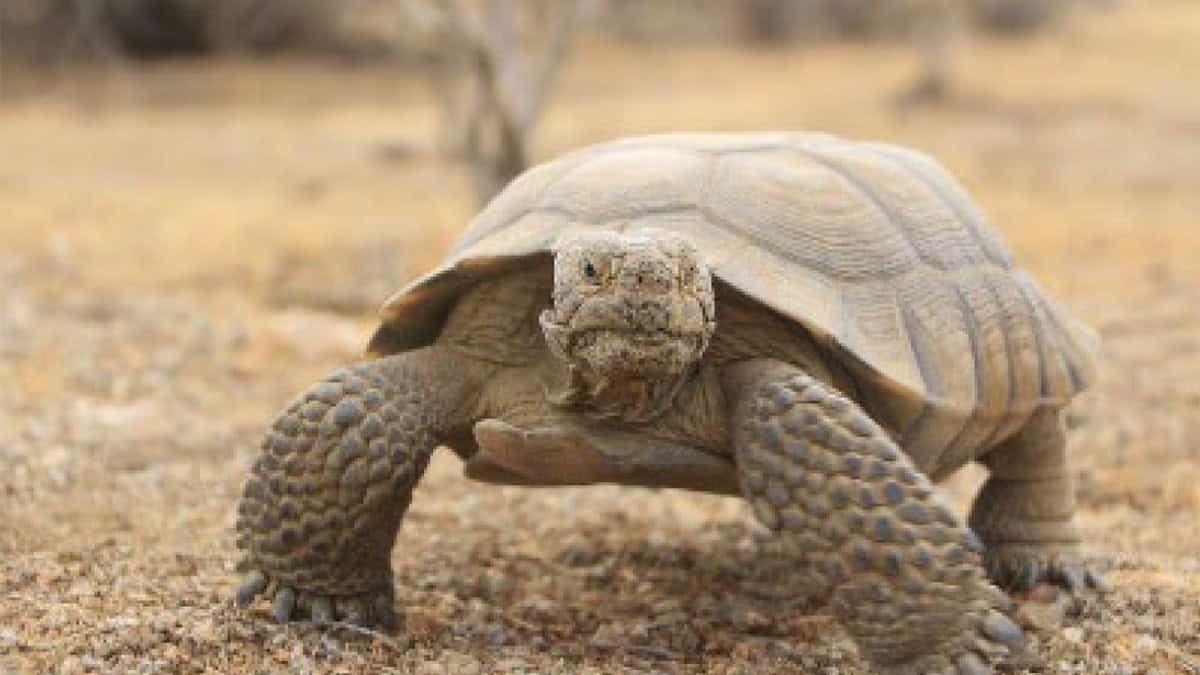
The Mojave Desert tortoise is California’s state reptile. The department describes it as a keystone species of Mojave Desert ecosystems, known for its long lifespan and burrowing habits. Habitat loss and fragmentation, disease and predation have driven significant population declines over several decades. The tortoise was listed as threatened under the California Endangered Species Act in 1989 and under the federal Endangered Species Act in 1990. The state uplisted it to endangered in June 2025, after three decades without population recovery.
The call identifies four project areas:
Eligible projects
- Habitat connectivity and linkage protection, including installing and maintaining tortoise fencing along roads in and near Tortoise Conservation Area corridors, and building or improving culverts, underpasses or overpasses.
- Cumulative-impact monitoring and data infrastructure, such as a centralized geospatial system to track surface disturbance, remediation effectiveness and translocation outcomes across the species’ range.
- On-the-ground habitat improvement in landscapes affected by adjacent development, including work on surface hydrology disruptions, predator monitoring and control, restoration and seeding with tortoise forage species, and removal of nonnative plants.
- Population augmentation of depleted populations, including facilities, head-starting and reintroduction, genetic testing, translocation logistics, health screening and post-release monitoring.
State and local agencies, special districts, California Native American tribes, public and private entities, nonprofits and land trusts may apply. Projects must be within the tortoise’s range and recovery units in California, including Imperial, Inyo, Kern, Los Angeles, Riverside and San Bernardino counties.
Terms
Cost sharing is not required but is encouraged and will benefit review and selection. Indirect costs may not exceed 20 percent of direct costs. Nonprofits and federally recognized tribes may be considered for advance payments of up to 25 percent of the total award. Otherwise, grants are paid on a reimbursement basis, and work done before an agreement is executed will not be reimbursed.
Applicants are responsible for Labor Code compliance, which may include prevailing wage requirements, and the department said it cannot advise on that. Submitted proposals become public records.
How to apply
Applications opened Wednesday, Oct. 21, and must be submitted through the department’s WebGrants system at watershedgrants.wildlife.ca.gov by Thursday, Dec. 3, 2026. The department will hold an online application workshop on Wednesday, Nov. 4. Webinar details will be posted on its Public Notices and Meetings page.
Applicants can request a consultation with department staff before submitting by emailing WatershedGrants@wildlife.ca.gov with the project title, location, type, description, questions and availability. WebGrants help is available at CDFWWebgrants@wildlife.ca.gov.
Awards are expected to be announced in spring 2027, with grants beginning in spring or summer 2027. All project work and final invoices are due by March 15, 2029.
Source: California Department of Fish and Wildlife