
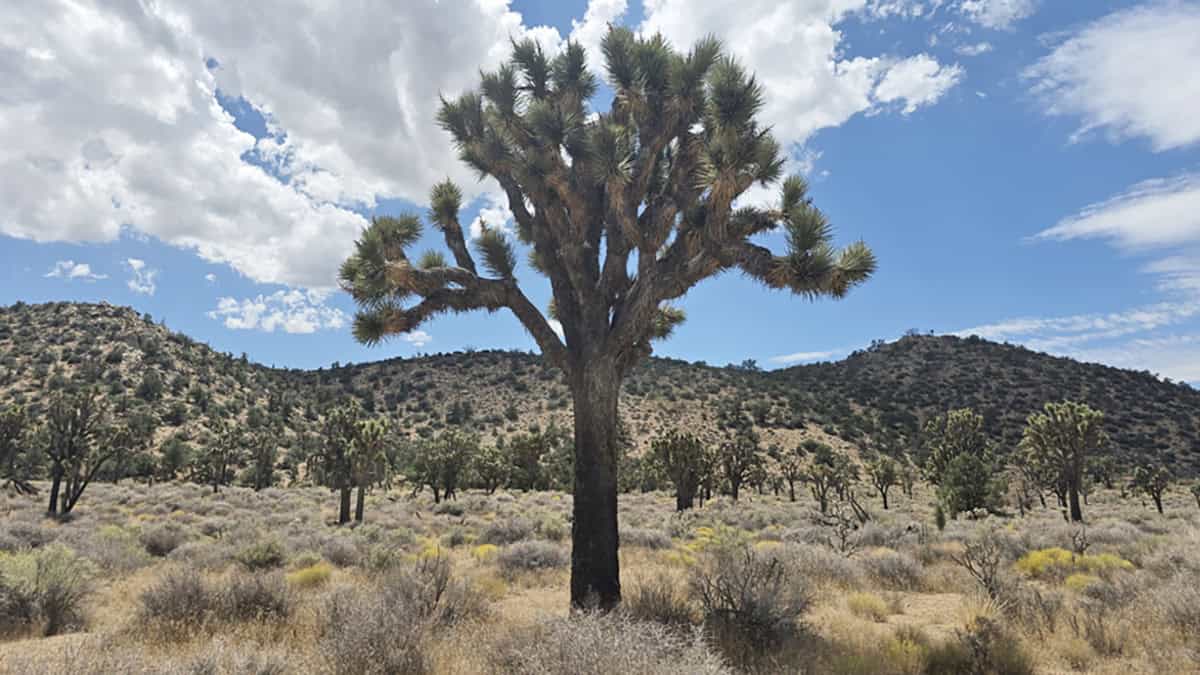
SACRAMENTO — The California Department of Fish and Wildlife has acquired 640 acres of western Joshua tree habitat northwest of Pioneertown in San Bernardino County, the agency announced recently.
CDFW bought the property Aug. 24 with money from the Western Joshua Tree Conservation Fund, according to a CDFW news release. The department said research based on environmental factors and climate projections indicates the parcel is highly likely to provide the best future suitable habitat for the species in Southern California.
The purchase counts toward conservation targets in the Western Joshua Tree Conservation Plan, the release said. CDFW is working with the Native American Land Conservancy on plans for long-term protection of the land and for co-management by the department and California Native American tribes.
“This is an example of the Western Joshua Tree Conservation Plan successfully put into action, as was intended, to help us protect this unique species in collaboration with tribal partners,” CDFW Director Meghan Hertel said in the release. “There is nothing else quite like the western Joshua tree. They are an important part of Native American cultural traditions, a keystone species for our desert ecosystems and they are also a sight worth taking a road trip for.”
Native American Land Conservancy President Michael Madrigal, of the Cahuilla Tribe, also commented in the release.
“We are so blessed to be able to steward this place into the future,” Madrigal said. “I will never forget the first time I went to this new preserve. It is such an amazing place with some of the largest Joshua trees I have ever seen.”
The western Joshua tree is a slow-growing succulent that holds cultural significance for Native American tribes, according to the release. CDFW lists wildfire, land development and a warming climate among the threats to the species.
The Pioneertown parcel is the second property bought with money from the fund, the department said. Together the two purchases protect 923 acres. CDFW is evaluating additional properties totaling 2,500 acres.
CDFW has also launched a web page showing revenue and expenses for the fund, the release said.
Fund web page launched
The Western Joshua Tree Conservation Act prohibits take of the tree without a CDFW-issued permit. Permit mitigation fees go into the fund and may be used only to acquire, conserve and manage western Joshua tree conservation lands and to carry out other activities to conserve the species, according to CDFW. More than $23.5 million has been deposited to date.
The page shows money spent, committed and reserved, organized by the categories named in the act: land acquisition and conservation easements, restoration, monitoring, endowments for land management, and transaction costs. CDFW said it will update the page regularly to reflect the fund’s balance and expenditures.
Source: California Department of Fish and Wildlife news release, Sept. 17, 2026