
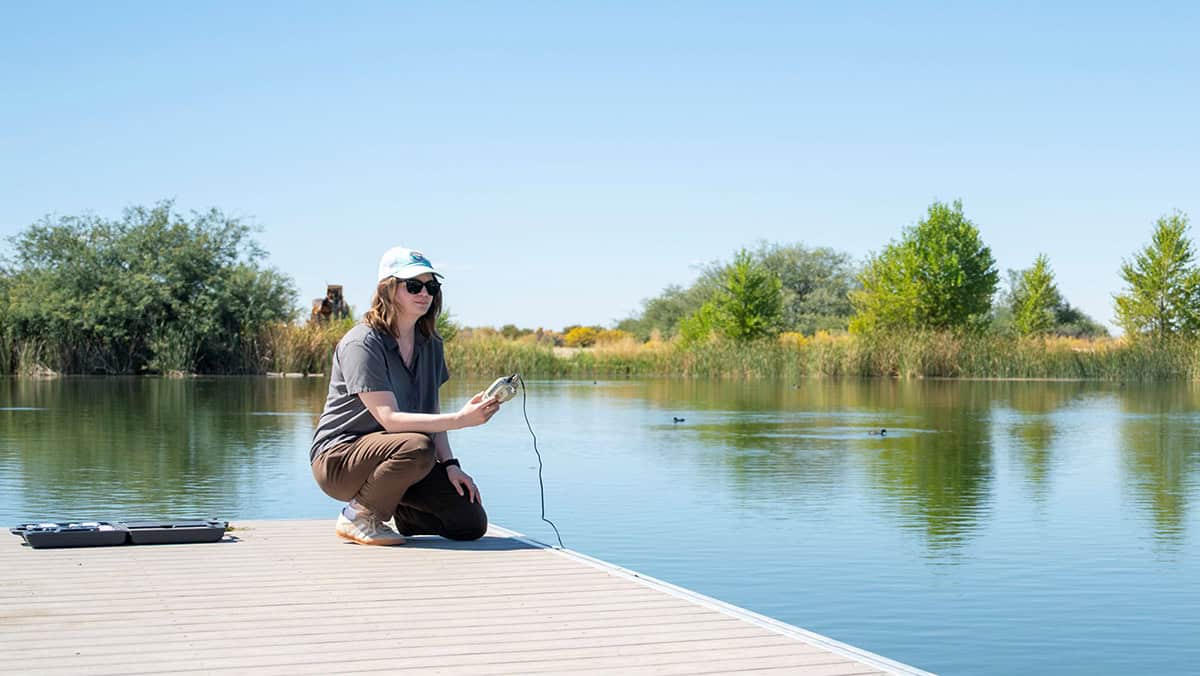
EDWARDS AIR FORCE BASE — Hidden in the Mojave Desert, where heat waves shimmer over cracked earth, unexpected sanctuaries of water and wildlife thrive. While the arid high desert is famous for its dry lakebeds, a unique combination of vegetation, soil and human ingenuity has created a series of remarkable desert ponds that hold water all year long.
Two of these fascinating oases are located on Edwards Air Force Base, offering a prime recreational opportunity for families, researchers and nature lovers alike.
Just over a mile north of the base’s south gate, a six-acre haven sits on Branch Memorial Park. Although the pond is entirely man-made, aimed to be kept at a depth of two to 12 feet by an underground well, nature has claimed it as its own. Today, the pond is surrounded by trees, wild shrubs and dirt paths, serving as home to birds and other wildlife. Visitors can explore a brand-new fishing dock, gather at picnic tables and barbecue grills, or watch their children play in the designated park zone. Campers can even pitch tents at one of 10 campsites reserved through the 412th Force Support Squadron.
“Branch Memorial Park Pond is a unique spot at Edwards AFB, and it provides a peaceful backdrop with abundant wildlife for recreational activities,” Leah Wilson, environmental planner with the 412th Civil Engineer Group, said.
While swimming and open fires are strictly prohibited, fishing is a major draw, though anglers need both a state license and an Edwards fishing permit.
“The base aims to stock the pond annually with largemouth bass, bluegill, redear sunfish and other species when available,” said James Papin, 412th CEG environmental resources and planning chief.
Non-motorized boats for fishing purposes are welcome on the waters of Branch Memorial Park Pond.
“By permitting watercraft like kayaks, canoes and rowboats, the base offers residents and those with base access a safe, serene way to fish while carefully preserving the park’s natural ecosystem,” said Misty Hailstone, natural resources manager for the 412th CEG. “We highly recommend that anglers using boats read the base instructions to ensure they are aware of all safety guidelines and details.”
Further southwest, six miles south of the intersection of Rosamond Boulevard and Division Street near the base’s west welcome sign, lies the expansive wetland complex known as the Piute Ponds. This rugged destination is accessible via rough dirt roads that require a high-clearance vehicle. While the public can visit, anyone entering from outside the installation must first clear a background check through the Edwards security office. Visitors should coordinate access by sending an email to: 412CEG.CEVA.PiutePondsWorkflow@us.af.mil.
The Piute Ponds Complex is maintained through a partnership between Edwards Air Force Base and local government. Originally, treated wastewater discharged into Amargosa Creek flowed into the Rosamond Dry Lakebed year-round. This continuous flooding created a significant hazard for military flight operations on the dry lakebed. To mitigate the risk, the Los Angeles County Sanitation constructed a series of dikes and barriers using compacted soil and other materials to contain the water. Today, the county and the Air Force jointly manage the ecosystem. It has become a premier destination for hikers, photographers and birdwatchers. When autumn arrives, the quiet waters also become a popular destination for duck hunters, who must be licensed through both the state and the military installation.
Together, these desert ponds stand as a vibrant reminder that life can flourish in the most unlikely places, bringing a welcome splash of joy and green to the High Desert.
LAISA LEAO is part of the public affairs staff of the 412th Test Wing at Edwards Air Force Base. This news release was originally published on Oct. 7, 2026.